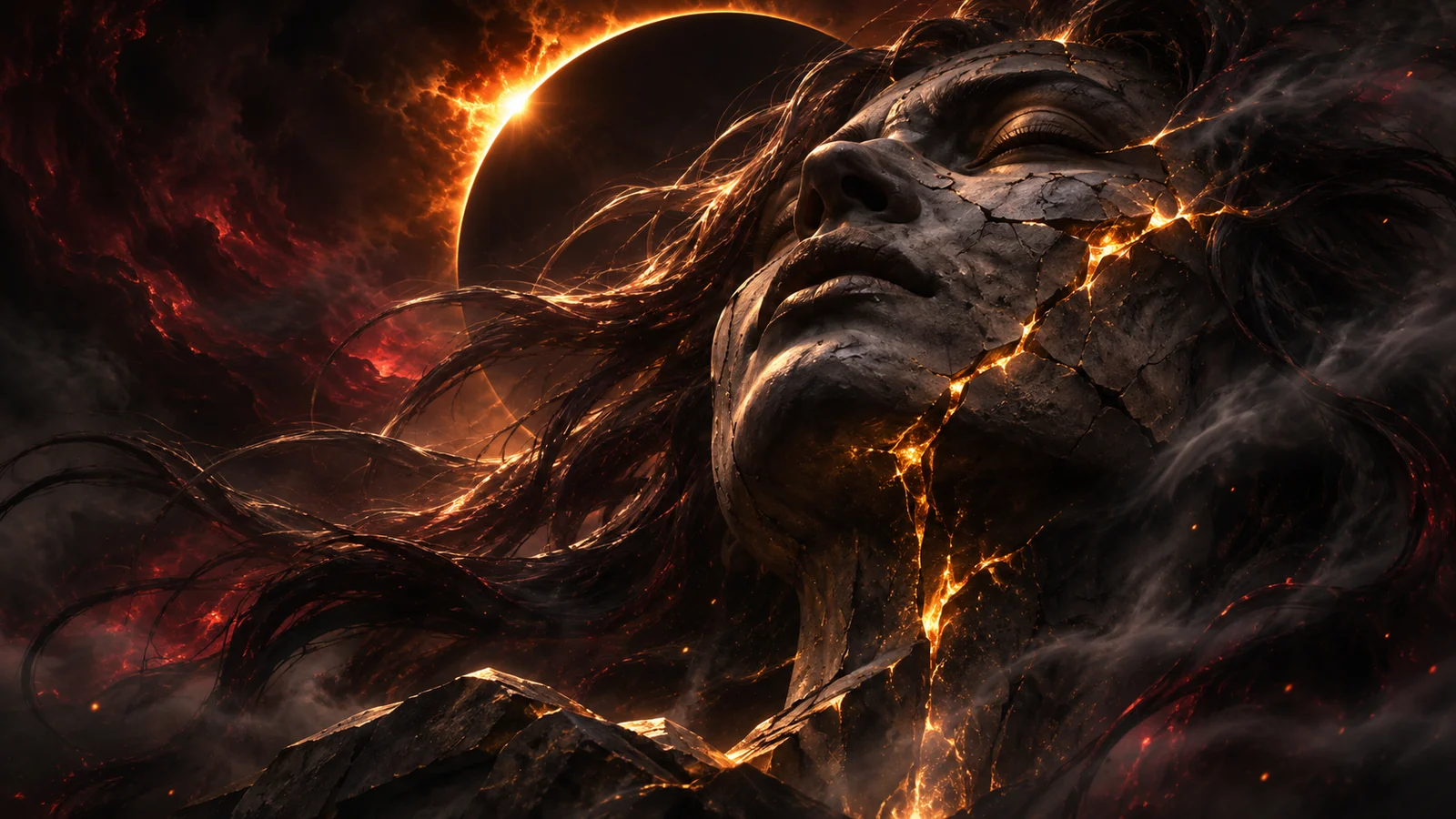
The Face Beneath the Festival
For nineteen years Oren carved the face of Mercy for the winter procession. It had narrow eyes, a patient mouth, and cheeks made smooth by generations of copying. He was praised for the expression. Nobody asked how he kept it so calm. In his workshop the rejected masks hung backward against the wall, their hollow interiors facing the room. His daughter once turned one around and found a furious open mouth. Oren took it from her so quickly that its edge cut her finger. He blamed the sharp wood.
That winter he began dreaming of the procession moving beneath a lake. Every figure carried his face. Some were kind, some frightened, one watched from behind a tree holding the little chisel he had lost as a child. At the end of the dream he reached the festival platform and discovered he was wearing the angry mask. He woke before anybody saw. For three nights he worked on Mercy's mouth, making it softer and less convincing. On the fourth he snapped the carving across his knee. His daughter heard and did not come downstairs.
The festival keeper brought an older mask from the hill shrine, hoping its proportions would help. The wood had split down one side. Oren followed the crack with his thumb and remembered the day his brother left the village. Everyone said his brother had stolen from their father's workshop. Oren had allowed them to say it. He had taken the money himself, wanting a ticket out, then lost his nerve. Afterward he had become exceptionally useful. The village called that devotion. He had learned to let them. Now every unfinished face seemed to be listening.
He walked to the lake carrying the angry mask. Throwing it in would be easy. Instead he sat on the landing until his daughter found him. He told her about the stolen money, the silence, the brother who had stopped answering letters that never admitted anything. She asked whether being gentle afterward had made him feel forgiven. He could not answer. The question remained between them while a reed tapped the landing. Eventually he said that some days his kindness had been real. She nodded. Some days was a fact they could begin with.
Oren wrote to his brother without asking him to return. At the next meeting he told the festival keeper why Mercy's face would not be ready. The keeper offered him a discreet explanation about illness. Oren refused it. That refusal cost him the commission, and with it a reliable part of the year's income. He took ordinary repair work while he waited for an answer that might never arrive. In the evenings he carved a new mask. It had the old fury around the eyes and a mouth uncertain whether to speak. He did not smooth the uncertainty away.
His daughter wore it in the procession. People argued over the figure it represented. A judge, somebody said. A frightened child, said somebody else. Oren watched from the edge of the square, recognizing both answers and the distance between them. His brother's reply arrived after the thaw. It was short, and it did not forgive him. There was an address at the bottom. Oren placed it above his workbench where the unfinished faces could see it. When he took up his chisel, he no longer turned the angry ones toward the wall.
Continue to the lyrics