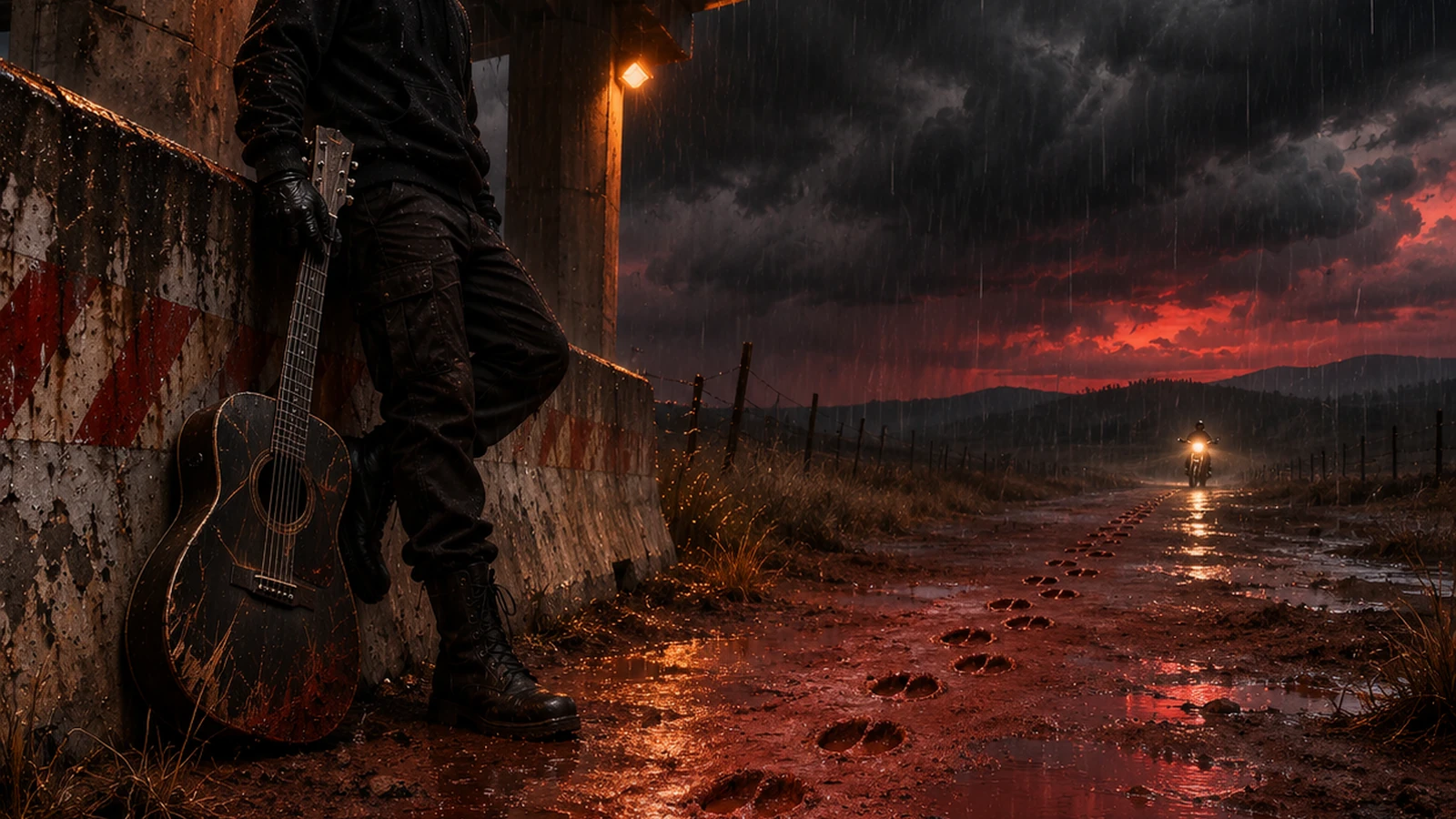
The Gate at Mercy Draw
Ask three ranchers about the riders and you will receive four explanations. They are rustlers who never reached the hanging tree. They are men who sold their neighbors during the drought. They are the neighbors. Old Lute, who kept the pump at Mercy Draw, would tell you the explanations were a way of keeping the story outside yourself. Then he would turn his cup over and refuse another drink. He had met them sober, he said, and intended to keep the account that way.
He was driving fence posts home when the horses crossed the ridge. No moonlight caught their backs. Beyond them a storm kept opening the sky, showing the same line of riders farther down the slope each time. Lute took his foot off the accelerator. The oldest story in the county advised a man to keep moving. The second oldest warned against letting them hear an engine. He switched off the truck and discovered how little help a choice between stories could be.
They passed close enough for him to see a saddle repaired with pale cord. His father had owned one like it. Behind the riders moved cattle wearing every brand the valley had forgotten. Some were driven. Some followed. One calf walked with the awkward patience of an animal learning where its legs belonged. Lute found himself counting them, though he had no idea what number would release him.
At the rear, a rider turned. He had no rope in his hands. Lute found that worse. The man asked where the water gate was. Lute pointed east, toward his employer's new reservoir. The rider waited. A wire had been stretched across the old draw that spring, closing the route used by the poorer holdings. Lute had installed it himself. He had been paid enough to replace his truck's transmission. He had not asked what would happen when the small wells failed. They had begun failing in June.
The rider moved nearer, and Lute heard water where the dry creek lay. Not much. Enough to remember. He wanted to explain that he had a family, that the reservoir belonged to someone else, that the county had approved the fence. Each explanation arrived wearing the saddle with the pale repair. His father had used the same sentences when the first families lost their ground. Lute opened the truck door. The riders did not stop him. That was how he knew they were waiting for something he could still choose.
He cut no dramatic path through the fence. He drove to the gate, unlocked it with the key his employer trusted him to carry, and chained it open. Then he telephoned the holdings downstream. By dawn there were witnesses at the draw and cattle moving toward the reservoir. His employer fired him before breakfast. The legal argument lasted through the winter. Those facts can be confirmed by people who never believed a word about the horses.
Lute said the riders were already gone when he returned to his truck. Nobody thanked him, alive or otherwise. He found one long impression beside the tire, filled with water though the storm had never reached the road. Years afterward, when thunder crossed the western hills, he walked to the gate and checked it himself. The riders still passed through other people's accounts: nearer the border, beyond the salt road, outside a town that had changed its name. Mercy Draw was a stop. They had never said it was the end.
Continue to the lyrics