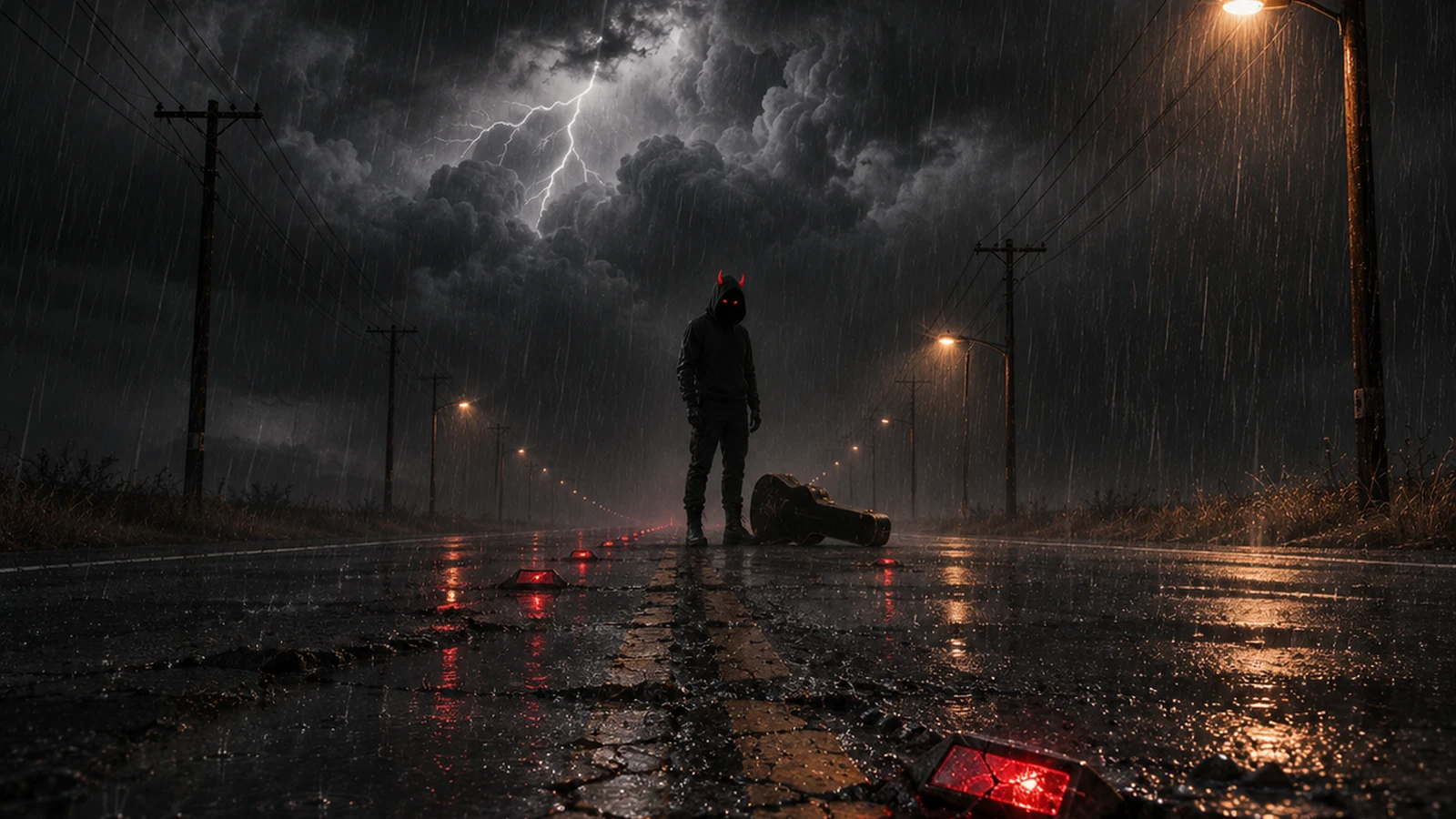
The Weight of a Footstep
Nobody remembered booking the stranger. At the freight hall, that was the first offense: every performer was supposed to arrive attached to somebody important. He came through the loading entrance carrying a battered amplifier and wearing boots with pale clay packed into their seams. The promoter checked the list, then checked the boots, as if obscurity might leave a recognizable stain. Behind him, two hundred people waited beneath an enormous silent lighting rig. The headline act had canceled. The generator was coughing itself apart. The stranger asked where they wanted the cabinet.
He had come from a settlement the railway maps represented with a siding number. There had been a machine shop there, and after the shop closed there had been arguments about whose fault it was. He learned rhythm listening to men dismantle equipment they had spent their lives maintaining. A wrench dropped into a bin. A hammer answered from the next bay. Nobody called it music. Nobody had a better name for the stubborn arrangement of noise that kept them working through the final week.
The promoter gave him twelve minutes. He set the amplifier on its side and asked the nearest people to take a step together. They laughed. He did it again, alone, the sole of his boot striking the sprung floor. Three people answered. Then the back wall sent the impact home. The hall had been built to bear freight, and it recognized weight before it recognized talent. He fed the returning vibration through a pickup taped beneath the cabinet. A low note moved through the crowd at knee height. Conversations broke off halfway through their excuses.
The generator failed on the fourth beat. Everything expensive disappeared. The stranger kept his foot moving. For a moment people could hear one another breathing, and the promoter reached for him with the furious embarrassment of a man whose failure had become public. The stranger caught that hand and lowered it gently. Then somebody at the rear stamped. Others answered. The floor took up the pattern without permission. He connected the amplifier to the small battery he had carried inside it all along. What came back was rougher than before, and alive with the room.
When the lights returned, they seemed late to their own event. The crowd had already found its shape. At the center, the stranger moved with the hard pleasure of someone no longer waiting to be introduced. He could have driven them into the locked doors. He felt that possibility, bright and ugly, and turned the next drop into an opening instead. People made space for the smallest bodies. Someone lifted a fallen glass before it broke. The power he had wanted was there, and it required more attention than anger ever had.
His twelve minutes became the rest of the night. By morning, people were giving the event a name, arguing about whether the building had shaken or whether they had. Black Static traveled ahead of him after that. In each town somebody expected a spectacle and somebody expected a threat. He arrived carrying the same cabinet. Before he touched a switch, he placed one boot on the floor and listened. There were places where it answered immediately. There were places that had forgotten they could. Those were the rooms he stayed in longest.
Continue to the lyrics