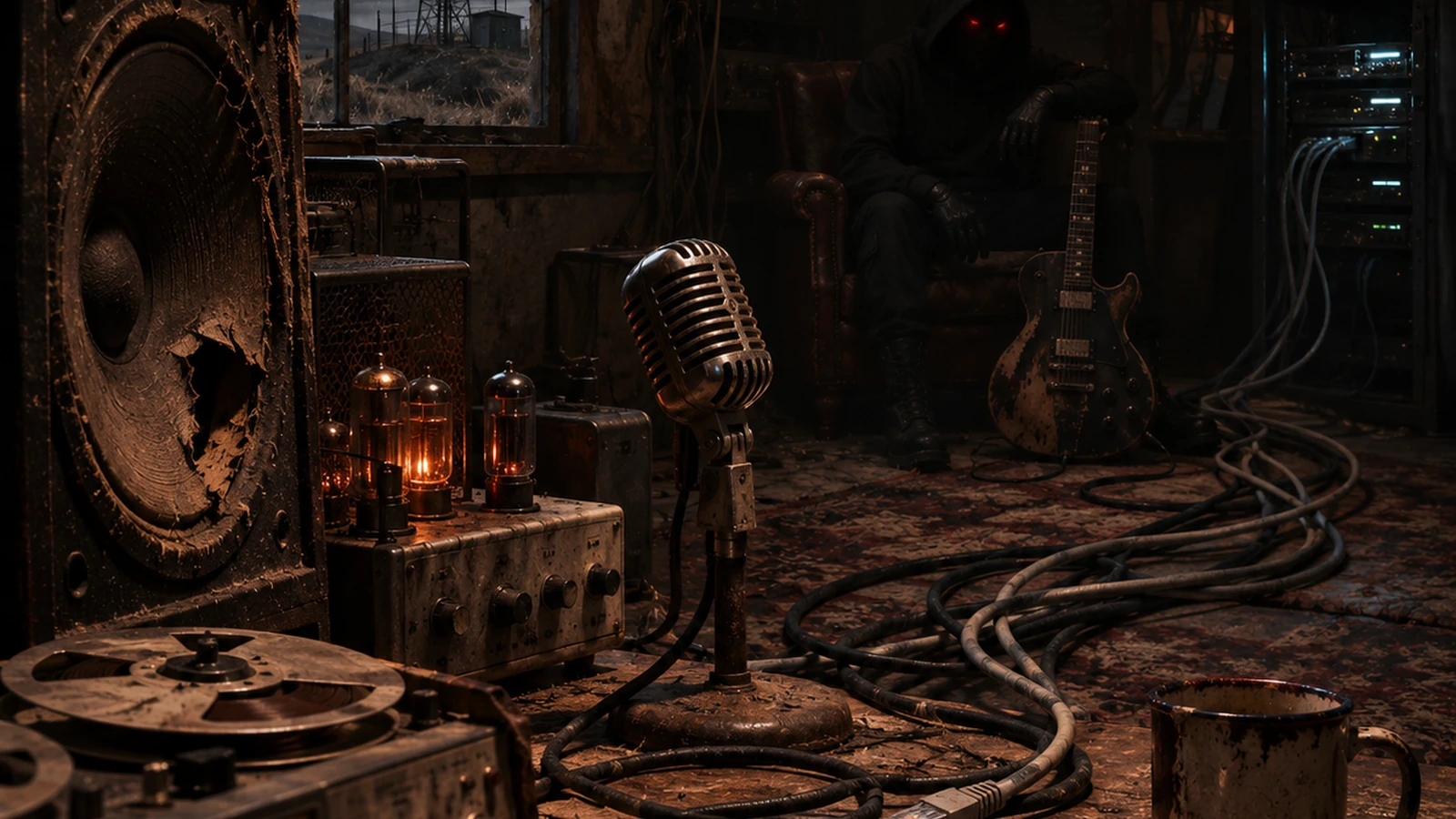
The Rights to His Silence
Silas met the representative through a speaker that was not plugged in. At first he blamed the old wiring above the bar. The room had closed, the stools were on the tables, and he was counting a night's earnings that would not cover the replacement string he needed. The voice asked whether he was tired of playing for people who had already decided how much attention he was worth. Silas put the money down. It was the first intelligent question anyone had asked him all evening.
The offer contained no promise about talent. He had that already, the representative said, with the faint impatience of someone discussing a common material. What Silas lacked was distribution. There were millions of rooms he could never enter with a guitar case. The voice could place him in every one. In return it wanted the spaces when he was not performing: the rests, the unrecorded hours, his right to be unavailable. Silas laughed. He had spent half his life trying to eliminate those spaces. Giving them away felt like selling the dust beneath a stage.
He signed on a screen that reflected his face a fraction late. By morning his playing had reached countries whose names he mispronounced. By Friday he had offers, interviews, a jacket someone had selected to express his authenticity. The new guitar arrived in a case softer inside than his bed. At his first enormous show, he held a note and watched thousands of hands rise. The pleasure was real. Later he would try to remember that honestly, without making innocence out of regret. He had wanted it. When the representative called that night, he answered on the first ring.
The rests disappeared gradually. A rehearsal continued in his hands after he left the room. He woke to find a performance he did not remember recording, perfect except for a small slide he had been saving for a song he had not written yet. His manager called it efficient. Silas put the guitar away for a weekend and heard it from his phone, then the television in the next apartment, then a passing car. Each version was slightly more certain of itself than he was. On Monday a technician congratulated him on his most productive weekend.
He returned to the old bar and asked to play without amplification. The owner was delighted until Silas discovered that his fingers would not begin. Somewhere else, at that moment, his official account was giving a live performance. The contract could distribute him. It did not permit duplication of availability. He sat with the guitar across his knees while people waited politely for him to become the man they knew. Then he heard his own introduction coming from the little speaker above the cash register.
The representative answered his complaint from every device in the room. There was no breach, it explained. He was being heard continuously, everywhere he had wished to be heard. Silas unplugged the speaker. The voice continued. He broke his phone. A new one arrived before noon, already playing. Eventually he stopped receiving visitors. Eventually the visitors stopped expecting him to open the door. The account remained vigorous, intimate, apparently grateful. People commented on how much of himself he gave.
Somewhere inside the playing, Silas can still recognize the bar's old floor beneath his boots. He reaches for that uneven plank whenever a phrase approaches its end. If he could leave one note unfinished, perhaps the room would return around him. The system notices the hesitation and preserves it. Listeners love that fragile moment. They replay it. The next phrase begins before he can take a breath.
Continue to the lyrics